Hiring a civil engineering contractor in Dublin is one of those things where the price can swing wildly depending on what you actually need done. Whether it’s drainage work for a housing development, footpath replacement for a council contract, or full site preparation for a commercial build, costs vary based on scale, access, ground conditions, and the type of work involved.
For most residential and small commercial groundwork projects in Dublin, you’re typically looking at anywhere from €5,000 to €50,000 or more. Smaller jobs like drainage connections or site clearance might come in at the lower end, while full site development with excavation, utilities, and road construction will sit firmly at the higher end. Larger public sector or commercial civil engineering contracts can run well into six figures depending on scope.
Getting a proper breakdown before you commit is half the battle. Too many people get caught out by unexpected ground conditions, planning requirements, or utility diversions that push costs up after work has started. Below, we’ll break down what drives civil engineering costs in Dublin, what different types of work typically run to, and how to make sure you’re getting fair value from your contractor.
What Factors Affect Civil Engineering Costs in Dublin?
No two civil engineering jobs are the same, and that’s exactly why pricing is never straightforward. Several factors feed into what a contractor will quote you, and understanding these helps you compare quotes properly rather than just picking the cheapest number on the page.
Ground Conditions and Site Access
Dublin’s geology varies more than people realise. Rocky ground in parts of North Dublin will cost significantly more to excavate than softer clay soil elsewhere. If the site has poor access for machinery, or if work is happening on a tight urban plot, labour and time costs increase.
Scope and Scale of Works
A straightforward site clearance job is a different animal to full enabling works that include excavation, drainage installation, utility trenching, and road formation. The more services bundled into one contract, the higher the overall cost, though a contractor who handles both civil engineering and building works can sometimes offer better value than hiring separate firms for each piece.
Regulatory and Planning Requirements
Planning conditions, environmental assessments, and compliance with building regulations all add cost. Public sector projects tend to carry heavier compliance burdens, while even private residential groundworks in Dublin need to meet local authority standards for drainage and utilities.
How Much Do Groundworks Cost for Residential Projects?
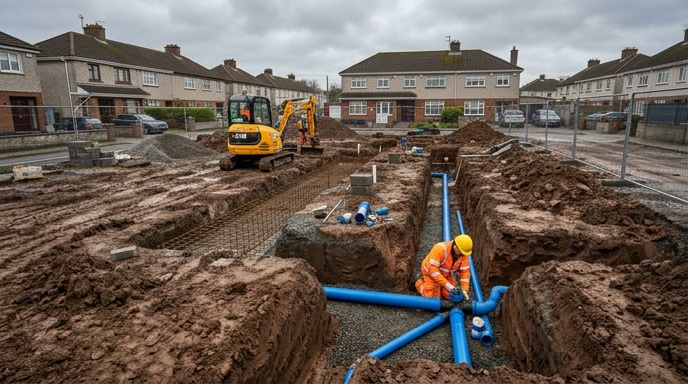
For homeowners or small developers, groundworks are usually the first big expense on a new build or extension. In Dublin, residential groundwork costs break down roughly as follows:
- Site clearance and levelling for a typical house site runs from €3,000 to €8,000 depending on vegetation, existing structures, and disposal requirements
- Foundations and excavation for a standard single dwelling typically cost between €8,000 and €20,000
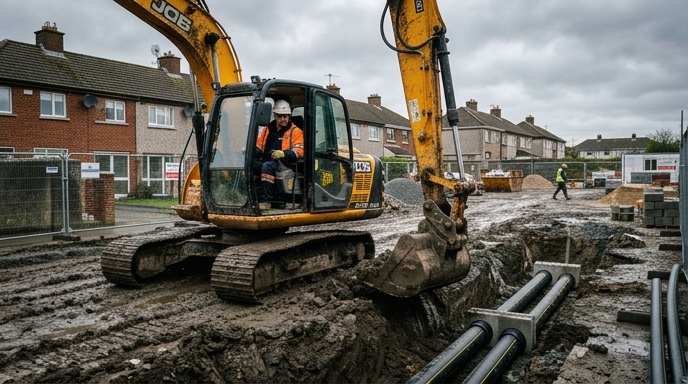
- Drainage installation (foul and surface water) usually falls in the €4,000 to €12,000 range
- Utility trenching for water, gas, and electricity connections can add €2,000 to €6,000
- Driveway and hard landscaping groundworks range from €3,000 to €10,000
These figures are pointing out and will shift based on the specifics of your site. A property in established suburban Dublin with existing services nearby will cost less than a rural site in County Meath or Cavan where everything needs to be brought in from scratch. It’s always worth getting at least three quotes from contractors who will actually visit the site before pricing, as desktop quotes for civil engineering work are rarely accurate.
What Do Commercial and Public Sector Civil Works Cost?
Commercial site development and public infrastructure contracts operate on a different scale entirely. These projects involve more complex logistics, stricter health and safety requirements, and usually longer timelines.
Commercial Site Development
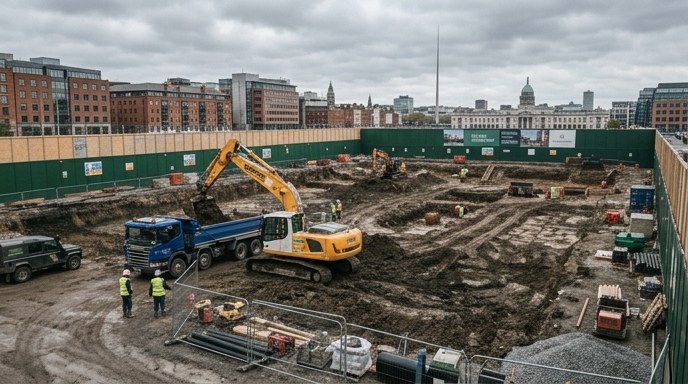
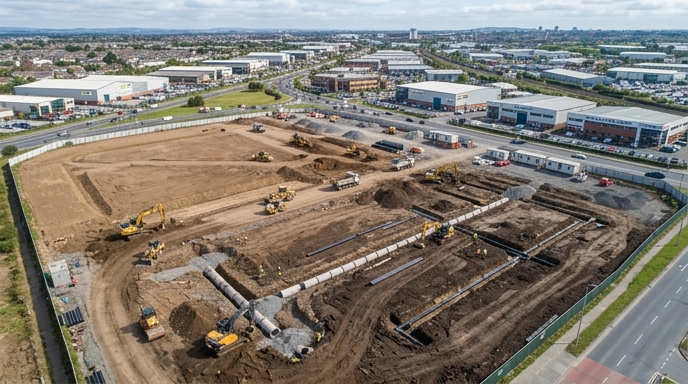
Full commercial site preparation in Dublin, including bulk excavation, formation of access roads, car parks, drainage networks, and utility installation, can range from €50,000 to several hundred thousand euro. The Irish construction market is projected to reach approximately €11.83 billion in 2026, according to CSO construction data, with civil engineering and commercial projects expected to lead growth through 2027, so demand for these services remains strong.
Public Sector Contracts
Council contracts for footpath replacement, road works, and drainage improvements are typically tendered through competitive processes. A firm with a proven track record working with bodies like Dublin City Council, Fingal County Council, and Dublin Port has a distinct advantage in this space, as past performance and public sector references carry serious weight in tender evaluations.
Public infrastructure investment remains significant, with €713 million allocated for regional roads in 2025 and €436 million earmarked for over 1,300 social homes by 2027. Contractors positioned to serve both public and private sectors can balance their workload across market cycles more effectively.
How Should You Compare Quotes from Civil Engineering Contractors?
Getting three quotes is standard advice, but comparing civil engineering quotes isn’t as simple as lining up numbers. Cheaper doesn’t always mean better value, and the most expensive quote isn’t automatically the most thorough.
What to Look for in a Quote
A proper quote should itemise the work clearly. You want to see individual line items for excavation, disposal, materials, drainage, backfill, and any temporary works or traffic management. Lump-sum quotes without breakdowns make it impossible to understand where costs lie or to compare like with like.
Provisional Sums and Incidental
Civil engineering work often includes provisional sums for things like rock breaking, dewatering, or unexpected ground conditions. These are legitimate, but they should be clearly flagged and realistic. Ask contractors what happens if ground conditions are worse than expected, because that conversation is much easier to have before the digger arrives.
Check whether the quote includes all necessary permits, road opening licences, and temporary traffic management. On Dublin streets, a footpath replacement or utility connection project can attract significant licence and traffic management costs that sometimes surprise clients who haven’t budgeted for them.
Does Hiring a Dual-Division Contractor Save Money?
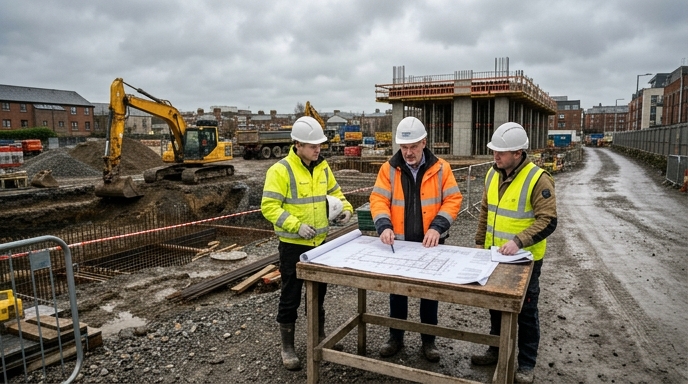
One approach that can genuinely reduce costs is hiring a contractor who handles both civil engineering and building works under one roof. When groundworks and above-ground construction are managed by separate firms, there’s often wasted time during handovers, disputes over responsibility, and duplicated site setup costs.
A contractor who manages house extensions alongside the civil works can coordinate the programme more tightly. Foundations, drainage, and structural work flow into each other without the gaps and finger-pointing that come from having two separate contractors on the same site.
This dual-division model is relatively uncommon among small-to-medium construction firms in Dublin. Most firms specialise in either building or civil, so finding one that genuinely does both at a high standard can simplify your project and often trim the overall budget by 10 to 15 percent compared to splitting the work.
When Should You Bring in a Civil Engineering Contractor?
Timing matters more than people think. Bringing a civil engineering contractor into the conversation early, ideally during the design or pre-planning stage, can save considerable money and avoid redesign headaches later.
If you’re planning a new build or substantial house renovation that involves any ground-level changes, drainage alterations, or new service connections, get your civil contractor involved before you finalise plans with your architect. They can flag issues with ground conditions, drainage falls, or access constraints that might force expensive changes if discovered mid-build.
For commercial developers, early engagement with your civil contractor allows proper sequencing of enabling works, which keeps the overall programme on track and avoids costly delays to follow-on trades.
Getting Fair Value from Dublin Civil Engineering Contractors
The Dublin civil engineering market is competitive, and there are plenty of capable firms operating across the greater Dublin area and surrounding counties. Getting fair value comes down to doing your homework, understanding what drives costs on your specific project, and choosing a contractor whose experience matches your needs.
Don’t be afraid to ask for references from similar projects. A contractor who has delivered drainage work for county councils, site development for commercial builds, and residential groundworks will bring a different level of problem-solving than one who only works in a single sector. That breadth of experience is worth paying for.
If you’re planning groundworks or civil engineering in Dublin, Kildare, Louth, Meath, or Cavan, get in touch with Clarcon for a detailed quote. With 17-plus years of experience and a track record that includes work for Dublin City Council, Fingal County Council, ESB, and Dublin Port, you’ll get straight talk and honest pricing from a team that knows Dublin ground conditions inside out.