Skip to content
If you’re planning a commercial build in Dublin, you’ll hear the term “site development” thrown around constantly. But what does it actually mean in practice? And more importantly, what should you expect when it comes to getting a site ready for construction?
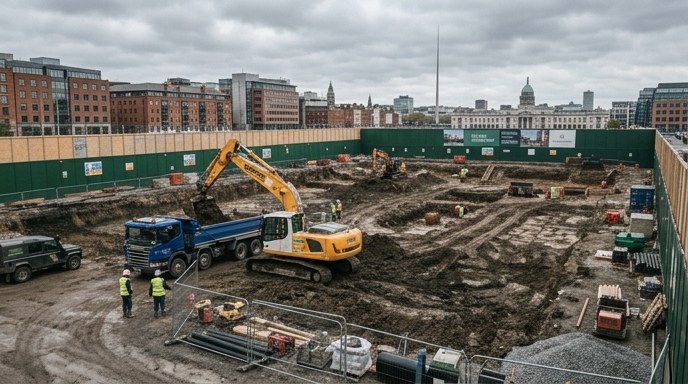
Commercial site development covers all the preparatory work needed before any building goes up. That includes everything from site clearance and excavation to drainage, utility installation, road access, and ground stabilisation. It’s the groundwork (literally) that determines whether your build runs smoothly or turns into a costly headache. Without proper site development, even the best-designed commercial building can run into structural problems, planning delays, or budget blowouts.
In Dublin, where land conditions vary hugely from coastal areas like Clontarf to clay-heavy ground out in West Dublin, getting this phase right is especially important. The scope and cost will depend on factors like site size, soil conditions, existing services, and what you’re planning to build. But one thing is consistent: skip or rush this stage and you’ll pay for it later.
What Does Commercial Site Development Actually Involve?
People sometimes assume site development just means “digging a hole and pouring foundations.” It’s far more involved than that. Commercial site development is a phased process that takes raw land and turns it into a construction-ready platform.
Site Clearance and Demolition
Before anything else, the existing site needs to be cleared. That could mean removing old structures, stripping vegetation, or dealing with contaminated ground. In Dublin’s older industrial zones, particularly around the Docklands or parts of North Dublin, there can be legacy issues with ground contamination that need specialist assessment.
Earthworks and Excavation
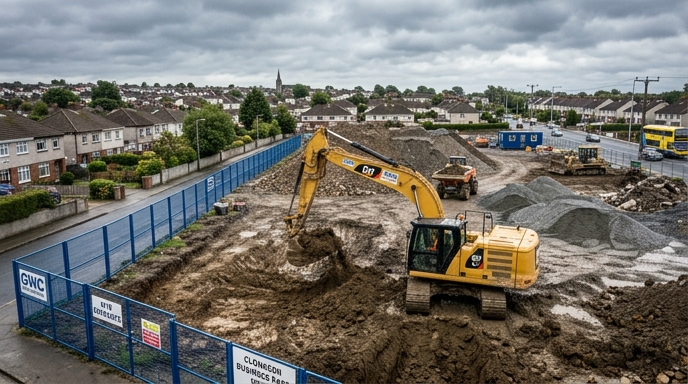
Once cleared, the ground is shaped to the required levels. This involves cut-and-fill operations, where earth is moved around the site to create a level building platform. Depending on the project, significant volumes of material may need to be imported or removed from site.
Drainage and Services
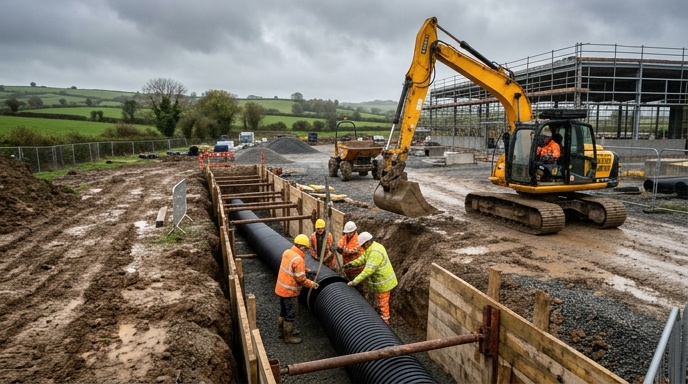
Installing foul and surface water drainage systems is one of the most critical elements. Commercial sites also need connections to mains water, gas, electricity, and telecoms. In Dublin, coordinating with Irish Water, ESB Networks, and Gas Networks Ireland can add time to the programme, so early engagement is always advisable.
Why Is Site Development So Critical for Commercial Projects?
With residential work, a poorly prepared site might cause a cracked wall or damp issue that surfaces years later. On a commercial project, the stakes are considerably higher. We’re talking about buildings that need to support heavy loads, accommodate complex mechanical and electrical systems, and meet stringent fire and safety regulations.
Poor groundwork on a commercial site can lead to settlement issues, flooding, utility failures, and even structural failure in extreme cases. It can also trigger planning compliance problems down the line if drainage or access arrangements don’t match what was approved.
Dublin’s planning authorities, including Fingal County Council and Dublin City Council, are particularly thorough when it comes to commercial developments. Getting your site development right from day one means fewer headaches during inspections and sign-offs, which keeps the wider project on track.
How Do Dublin’s Ground Conditions Affect Site Work?
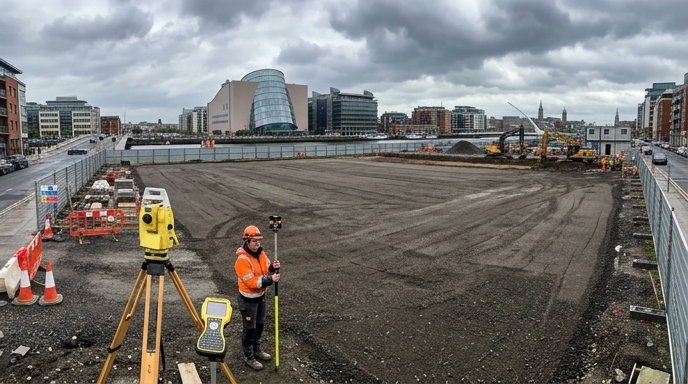
Dublin sits on a mix of geological conditions that can catch developers off guard. Along the coast and in low-lying areas, you’ll often encounter soft, waterlogged ground that requires dewatering or ground improvement before any foundations can go in. Inland, particularly in areas like Blanchardstown or Lucan, boulder clay is common, which is stable but tough to excavate.
A proper site investigation (SI) is non-negotiable for any commercial project. This typically involves trial pits, boreholes, and laboratory testing to establish what’s beneath the surface. The results feed directly into foundation design, drainage strategy, and the overall site development plan.
Clarcon, based in Lusk in North County Dublin, has worked on commercial and civil projects across the region for over 17 years. That kind of local experience matters when you’re dealing with variable ground conditions, because knowing what to expect in a particular area saves time and prevents costly surprises during excavation.
What Are Common Stages in a Commercial Site Development Programme?
Every commercial site is different, but the general sequence of works tends to follow a similar pattern. Here’s what a typical programme looks like:
- Site investigation and topographical survey
- Planning compliance review and pre-commencement conditions
- Site clearance, hoarding, and temporary access roads
- Bulk earthworks and level formation
- Drainage installation (foul, surface water, attenuation)
- Utility diversions and new service connections
- Sub-base preparation and road construction
- Foundation preparation and piling (if required)
The order can vary depending on the project, and some stages overlap. On a tight Dublin site with neighbouring buildings close by, temporary works like sheet piling or retaining walls might be needed early on to protect adjacent properties. This adds both cost and complexity but is often unavoidable in built-up areas.
How Much Does Commercial Site Development Cost in Dublin?
Pricing for commercial site development varies enormously depending on site size, ground conditions, the extent of services required, and access constraints. As a rough guide, smaller commercial sites in Dublin might see site development costs starting from around €50,000, while larger or more complex sites can run well into six figures. For a wider breakdown of site preparation costs beyond commercial projects, see our guide to construction site development costs in Dublin.
Factors That Push Costs Up
Contaminated ground requiring remediation is one of the biggest cost drivers. Rock excavation, deep drainage runs, and the need for piled foundations all add significantly to the bill. Sites with poor access, particularly in Dublin’s city centre, also carry a premium because of the logistics involved in getting machinery and materials in and out.
Factors That Help Control Costs
A thorough site investigation before tendering reduces the risk of unexpected ground conditions blowing the budget. Early engagement with utility providers shortens the programme. And working with a contractor who handles both civil engineering and building works, like Clarcon does through its dual-division model, can streamline the process and reduce coordination headaches between separate firms.
How Do You Choose a Site Development Contractor in Dublin?
Not all groundwork contractors are set up for commercial-scale projects. When you’re evaluating potential contractors, there are a few things worth looking at closely.
Experience with similar projects is the obvious starting point. A contractor who has delivered commercial site development for public and private clients will understand the compliance requirements, the coordination involved, and how to manage a programme efficiently. Clarcon’s track record includes work for Dublin City Council, Fingal County Council, Dublin Port, and the ESB, which demonstrates the kind of accountability and standards that commercial clients should expect.
Insurance and health and safety credentials matter too. Commercial sites fall under stricter CDM-equivalent regulations in Ireland, and your contractor needs to have robust safety management systems in place. Ask for evidence of safety statements, method statements, and relevant insurance cover before anyone sets foot on site.
Finally, communication. Commercial site development involves multiple stakeholders, from architects and engineers to planners and utility companies. Your groundwork contractor needs to be comfortable coordinating with all of them and keeping you informed throughout.
When Should You Start Planning Site Development?
Earlier than you think. One of the most common mistakes on commercial projects in Dublin is leaving site development planning too late. Ideally, site investigation work should begin during the design stage, well before you apply for planning permission. This allows the design team to make informed decisions about foundation types, drainage strategy, and site layout.
Utility connections in Dublin can take months to arrange. Irish Water, for example, often has lead times of 12 weeks or more for new commercial connections. ESB connections can be similar. Starting these applications early in the process prevents them from becoming critical path delays once construction begins.
If you’re at the early stages of a commercial project in Dublin or the surrounding counties, getting a site assessment done sooner rather than later will save you both time and money. Clarcon covers Dublin, Kildare, Louth, Meath, and Cavan, with over 17 years of combined experience across civil and building works. You can get in touch through their website or call 01 437 0645 to discuss your project requirements.