 Skip to content

Construction projects rarely go sideways because of one big disaster. They go sideways because of a handful of small, avoidable mistakes stacked on top of each other. A weak brief here, a rushed contract there, a budget with no contingency, and suddenly a six-month build is running into month ten.
The good news is that most of these mistakes are predictable. If you know where projects tend to trip up, you can plan around them from day one.
Below are the 10 most common construction project mistakes in Ireland, along with practical advice on how to avoid each one before it costs you time, money, or your sanity.
Mistake 1: Starting Without a Clear Project Brief
A vague brief is the single biggest cause of budget overruns and disputes on Irish construction projects. Before any drawings, quotes, or site visits, you need a written brief covering scope, priorities, budget range, and non-negotiables.
A strong brief should answer four questions clearly.
- What are you trying to achieve, in one paragraph?
- What is your realistic budget range, including a 10–15% contingency?
- What’s the target completion date and why?
- What are the three things that matter most (space, finish quality, energy performance, etc.)?
Share this brief with your architect, engineer, and builder. When everyone works from the same page, quotes come back tighter and comparable, and design decisions stay aligned with what you actually want.
Mistake 2: Skipping Planning Permission Checks
Assuming your project is exempt from planning permission is a costly gamble. Even small extensions, garden rooms, or changes of use can require planning depending on floor area, height, and proximity to boundaries.
Before committing to a design, check the current exemption thresholds with your local authority. You can review the current rules through official guidance on planning permission from Citizens Information, which is a reliable starting point before speaking to a planner.
When Retention Isn’t a Safe Fallback
Retention permission is not guaranteed. If the council decides the work materially contravenes the development plan, retention can be refused and enforcement action can follow. Treat retention as a last resort, never as a plan.
Mistake 3: Underestimating the Real Budget
One of the common construction project mistakes is that the budget from the start was never realistic. A proper cost breakdown for a construction project includes build cost, professional fees, VAT, connections and services, and a contingency.
Build in a contingency of at least 10% for new builds and 15–20% for renovations, where surprises behind walls and under floors are more common.
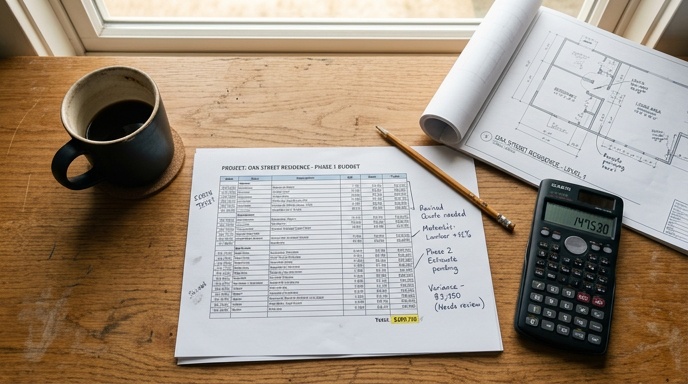
Cost items that regularly get forgotten include the following.
- Planning fees, engineer certs, and assigned certifier costs
- ESB, Uisce Éireann, and gas connection charges
- Site clearance, demolition, and skip hire
- Landscaping and reinstatement after the build
- Kitchen, wardrobes, and fitted furniture, which are often excluded from builder quotes
Ask every contractor exactly what is included and, more importantly, what is excluded. Compare like with like or the cheapest quote will end up being the most expensive.
Mistake 4: Choosing a Builder on Price Alone
The lowest quote is almost never the best value on a construction project. A price that’s 20% below the others usually means something is missing from the specification, or the contractor is planning to make it up in variations later. Either way, you pay the difference eventually.
When comparing builders, weigh the quote against experience, references, and recent similar projects.
- Ask for two or three references from projects completed in the last 12–18 months.
- Visit a live site if possible to see how they run their operations.
- Check their tax clearance status and public liability insurance cover.
- Confirm registration with the Construction Industry Register Ireland, which is the recognised register for competent builders.
A good builder will welcome these checks. If a contractor is reluctant to share references or credentials, that’s your answer.
Mistake 5: Signing a Weak Contract
Handshake deals and one-page quotes cause more disputes than any other single issue. Your contract is the document you’ll rely on if timelines slip, quality drops, or costs escalate. If it’s vague, you have no leverage.
A proper construction contract should include the following as a minimum.
- Detailed scope of works and specifications
- Fixed price or clearly defined pricing mechanism
- Payment schedule tied to milestones, not calendar dates
- Programme with start date, key milestones, and completion date
- Variation procedure and how extras are priced
- Retention amount and defects liability period
- Dispute resolution process
For most residential projects, an RIAI or Law Society standard form contract is appropriate. For larger works, your architect or quantity surveyor can advise on the right form. Spending a few hundred euro on legal review at this stage can save tens of thousands later.
Mistake 6: Poor Site Preparation and Ground Investigation
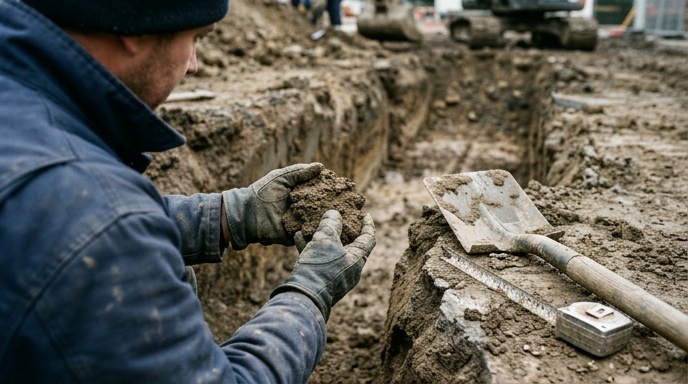
Skipping proper site investigation is one of the most expensive mistakes on any build. Unknown ground conditions, poor drainage, or hidden services can turn a straightforward foundation into a major redesign. On extensions, existing foundations are often shallower or weaker than assumed, which changes the whole approach.
Before design is finalised, invest in the basics.
- A trial hole to confirm ground conditions and existing foundation depths
- A drainage survey to map existing runs and identify capacity
- Utility searches for ESB, gas, and water mains
- A percolation test where a new septic tank or soakaway is involved
These investigations typically cost a fraction of what it costs to fix an unexpected ground condition mid-build. They also give your engineer the information needed to design foundations that will actually work on your site.
Mistake 7: Making Design Changes Mid-Build
Design changes after work starts are the fastest way to blow a budget and a programme. Moving a wall on paper takes ten minutes. Moving a wall that has already been built involves demolition, new materials, revised drawings, updated services, and knock-on delays to every trade following behind. Every variation costs more than it should.
How to Lock the Design Down Early
Freeze the design before you break ground. Walk through every room with your architect, mark up every socket, switch, radiator, and window sill height, and sign off the drawings. Once the builder is on site, treat any change as a formal variation with a written price and time impact before it’s approved.
A useful rule is the 24-hour pause. If a change occurs to you mid-build, wait a day before agreeing to it. Half the time you’ll realise it isn’t worth the cost.
Mistake 8: Ignoring Health and Safety on Site
Health and safety is a legal duty for anyone commissioning construction work, not just the builder. Under Irish law, homeowners and developers are considered clients under construction regulations and have specific responsibilities. Getting this wrong exposes you to serious liability and, more importantly, puts people at risk.
The Health and Safety Authority’s construction guidance sets out client duties clearly, including appointing a Project Supervisor Design Process and a Project Supervisor Construction Stage for notifiable projects.
Practical steps to get right.
- Confirm your builder has a written safety statement and site-specific risk assessments
- Check that public liability insurance is current and adequate
- Ensure scaffolding, edge protection, and access are properly set up before work at height begins
- Keep the site secure from children and neighbours, especially over weekends
Mistake 9: Weak Communication and Site Management
Projects run on communication as much as they run on materials. When homeowners, architects, and builders aren’t talking regularly, small issues become big ones. A missed decision on tile choice can delay bathroom finishing by two weeks if the tiles need ordering from abroad.
Set up a simple communication rhythm from day one.
- A weekly 30-minute site meeting with builder and architect
- A shared decision log tracking what’s been agreed and what’s outstanding
- A single point of contact on the client side to avoid mixed messages
- Written confirmation of any verbal agreements within 24 hours
This isn’t about being difficult. It’s about making sure the project keeps moving and everyone is working from the same information. Well-run sites always need a trusted construction company who stay transparent and communicates well.
Mistake 10: Rushing the Final Snag and Handover
The last 5% of a project takes longer than most people expect, and rushing it leads to defects you’ll live with for years. Once the site is nearly finished, energy drops on both sides. The client wants to move in, and the builder wants to move on. That’s exactly when snag lists get cut short.
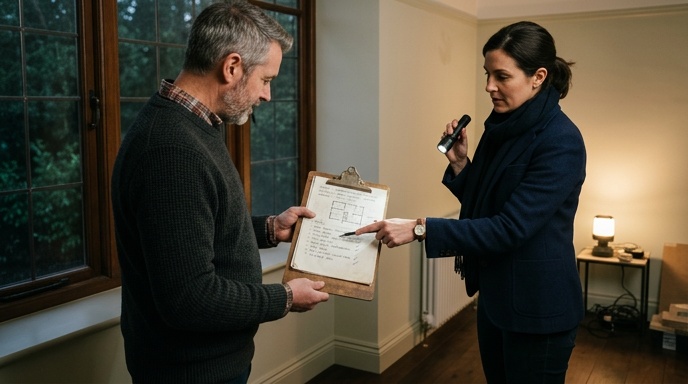
Do the snag properly. Walk every room with a torch, check every socket and switch, run every tap, open every window and door, and test the heating on every zone. Bring your architect or a professional snagger with fresh eyes because you’ll miss things after months on site.
Retain 5% of the contract value until the snag list is fully closed out. Half of that is typically released at practical completion, with the balance held through the defects liability period, usually 12 months. This gives the contractor a clear incentive to come back and fix issues that emerge after handover.
Planning Your Next Project the Right Way
Most construction projects that go well share the same DNA. A clear brief, a realistic budget with contingency, a contractor chosen on more than price, a solid contract, and disciplined communication throughout. Avoid these 10 construction project mistakes and you’ll be ahead of most projects before the first block is laid.
If you’re planning an extension, renovation, or civil works project in Dublin or the surrounding counties, get in touch with our team for a straight-talking chat about scope, budget, and next steps.


