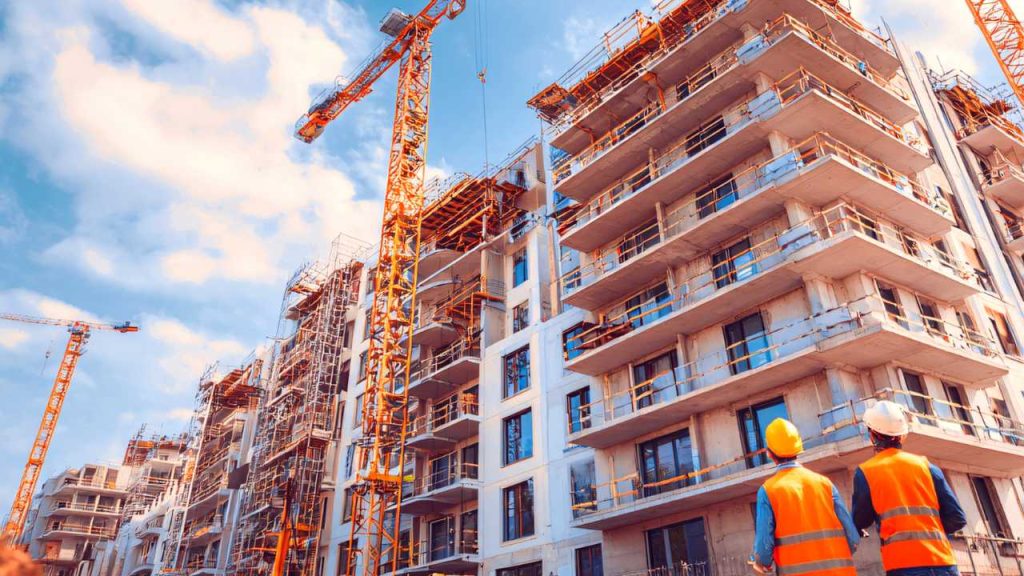
Construction site development cost in Dublin depends on the condition of the land, the size of the site and the amount of groundwork needed before building can begin. For most projects it is priced as a set of components, site clearance, excavation, drainage, foundations and utility connections, rather than a single rate, and the total is shaped far more by what lies beneath the ground than by the size of the building that will sit on top.
This guide breaks down what actually drives the cost of developing a site in Dublin, what the main components are, and how to keep the budget under control.
What Construction Site Development Actually Covers
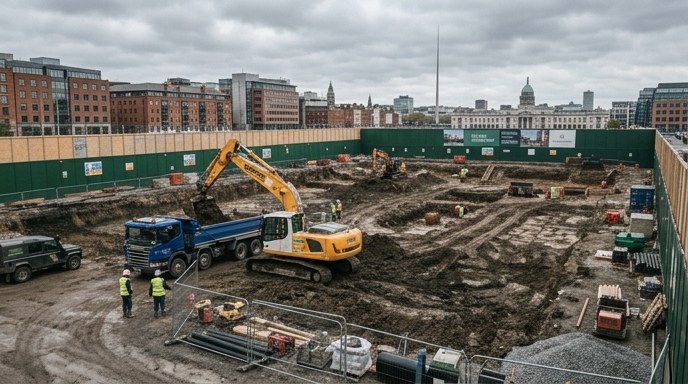
Construction site development is the work that turns a plot of raw or cleared land into a site ready to build on. It is a distinct stage from the build itself, and it is where many projects lose time and money when it is rushed or underestimated.
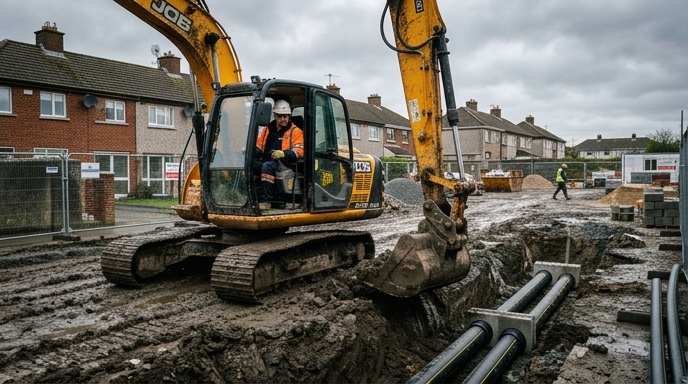
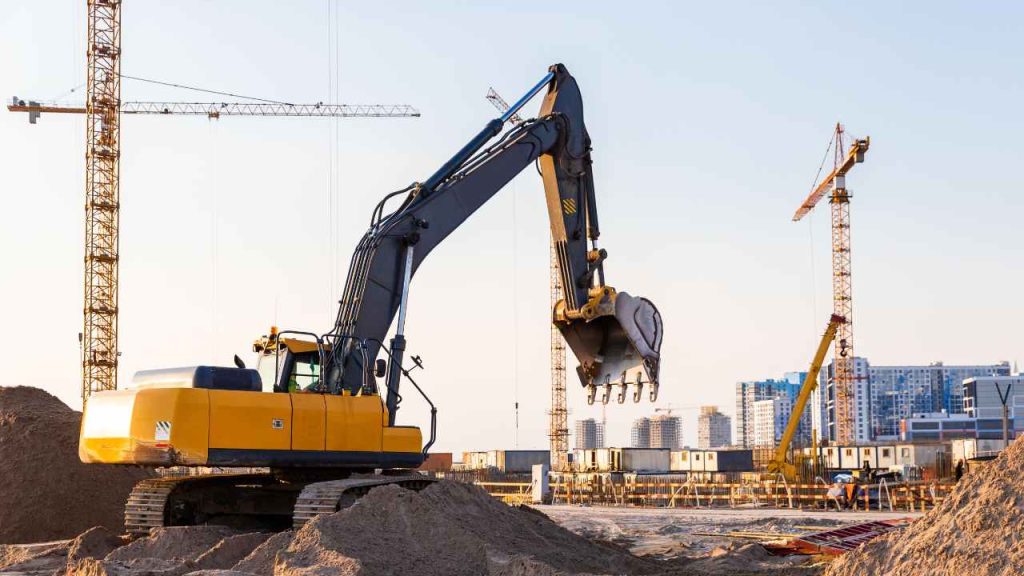
The work usually includes site clearance and the removal of existing structures or vegetation, excavation and earthworks to shape and level the ground, installing foundations, laying foul and surface water drainage, connecting utilities such as water, electricity and wastewater, and forming access routes for vehicles and machinery. It also includes making sure the site meets planning conditions and Building Regulations before construction starts.
Done properly, this stage gives the build a stable, compliant and predictable start. Done poorly, it produces the delays, safety issues and cost overruns that show up later as someone else’s problem.
What Drives Construction Site Development Cost in Dublin
There is no single fixed rate for site development, because no two sites are the same. These are the factors that decide what you will pay.
Ground and soil conditions. This is the single biggest variable. A level site with firm, well-draining soil is straightforward. A site with soft ground, a high water table, contaminated soil or rock requires extra engineering, piling, reinforced foundations or additional drainage, all of which add significant cost. You often do not know the full picture until a site investigation is carried out, which is exactly why one should be done before the budget is finalised.
The amount of excavation and earthworks. A sloping or uneven site needs cutting, filling and levelling before anything else can happen. The more material that has to be moved, and the more spoil that has to be removed from site, the higher the cost.
Drainage requirements. Foul and surface water drainage is a core part of site development. As a guide, installing drainage pipe, including digging, laying and backfilling, costs in the region of €50 per linear metre in Ireland, before manholes, gullies and connections are added. Sites that need attenuation or a soakaway for surface water will carry additional cost.
Utility connections. Connecting to water, electricity and wastewater networks carries separate charges, and these are frequently underestimated in early budgets. Sites without nearby connections, or that need an on-site wastewater treatment system, cost more.
Site access and location. Urban Dublin sites often cost more to develop than open rural plots, because tight access, restricted working hours and limited space for machinery and storage all slow the work down and add to labour costs.
Regulations and compliance. Updated building standards and environmental requirements mean more inspections and higher-specification materials. Compliance is not optional, and it adds to the starting cost before any building work begins.
Site Development as Part of the Total Build Cost
It helps to see where site development sits in the bigger picture. For construction projects, costs are usually split into hard costs and soft costs. Hard costs cover the physical work, materials and labour, including the groundwork and site development. Soft costs cover land, VAT, professional fees and margins.
For a typical three-bedroom semi-detached house in the Greater Dublin Area, that split has been reported by the Society of Chartered Surveyors Ireland at roughly 48% hard costs and 52% soft costs, which shows how much of a project’s budget sits outside the physical build. Construction work in Ireland is also charged at the reduced VAT rate of 13.5%, which should always be included when comparing quotes.
Site development is a hard cost, and it is one of the first hard costs you commit to. Getting it estimated accurately early protects the rest of the budget.
Inflation and the Current Market
Construction costs in Dublin have risen steadily. The Society of Chartered Surveyors Ireland tender price index has shown annual increases of around 3% in recent years, driven by labour and material price growth. For site development, this means a budget prepared on last year’s figures may already be short. Any project planned over a long timeline should build in an allowance for ongoing price increases.
How to Keep Construction Site Development Cost Under Control
Get a site investigation done first. Because ground conditions are the biggest cost variable, a proper site investigation before you finalise the budget is the most valuable thing you can do. It is far cheaper to discover poor soil or a high water table on paper than halfway through excavation.
Get itemised quotes. Ask each contractor to break the quote down by component, clearance, excavation, drainage, foundations, and utilities, so you can compare like with like. A low headline figure sometimes means a stage has been left out.
Build in a contingency. Site development is where surprises live. A contingency of 10 to 15% is sensible, and more on older or unknown ground. The same principle applies across construction budgeting, as our guide to house renovation costs in Dublin explains.
Work with an experienced local contractor. A contractor who knows Dublin ground conditions, planning rules and Building Regulations can spot risks early and plan around them, rather than discovering them mid-project. That experience is what keeps a site development budget predictable.
Get an Accurate Site Development Cost for Your Project
The only way to know what your site will cost to develop is to have it assessed properly. Clarcon has carried out site development and construction site development projects across Dublin for over 17 years, for both residential and commercial clients. We provide clear, itemised cost guidance based on your actual site, not a generic rate.If you are planning a project, contact our team for a free quote, or call 01 437 0645. For larger commercial schemes, see our commercial site development service.