Skip to content

Terrazzo is having a proper moment in Irish homes again, and for good reason. It’s a surface that looks fresh in a modern kitchen, classic in a hallway, and somehow ties together both at the same time.
So how exactly does terrazzo give your home a style update? In short, it brings colour, texture, and a sense of craft into rooms that often feel flat. The chips of marble, glass, or stone set into the base create a finish that feels custom, even in a standard semi-detached layout, and prices typically run from €90 to €180 per square metre installed depending on the design.
If you’re weighing up a refresh that won’t date in five years, this is one of the few materials that genuinely earns its keep.
What Makes Terrazzo Such a Strong Style Choice?
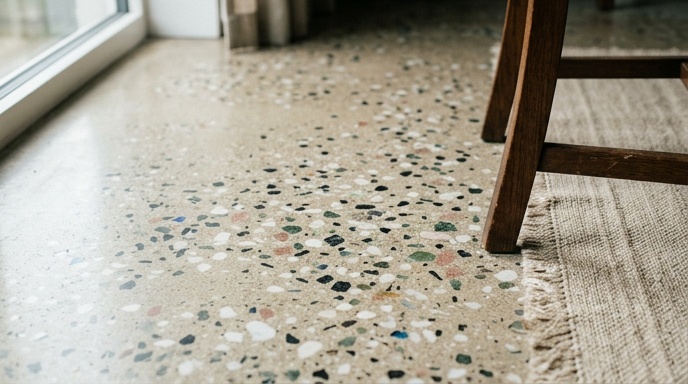
Terrazzo is a composite material made from chips of marble, quartz, granite, or recycled glass bound in cement or resin. Once it’s poured, ground, and polished, you get a smooth surface with depth and movement that no printed tile can really copy.
It works because it sits between two design worlds. It can feel warm and rustic with earthy tones and large aggregate, or sharp and contemporary with a tight chip pattern and a pale base. That flexibility is rare in flooring.
- Available in poured (in-situ) or pre-cast tile format.
- Custom colours and chip sizes to match your interior scheme.
- Seamless finish for poured terrazzo, meaning no grout lines to clean.
- Suits both period homes and new builds across Dublin and the commuter counties.
For homeowners tired of the same grey porcelain tile that’s been in every showroom since 2015, terrazzo offers a way to stand out without going overboard.
Which Rooms Benefit Most From a Terrazzo Update?
Terrazzo isn’t just for grand entrances anymore. It performs well in almost every room of an Irish home, especially the ones that take heavy traffic or moisture.
Kitchens and Open-Plan Living Areas
This is where terrazzo really pulls its weight. A poured floor across a kitchen and dining area gives you one continuous surface, which makes the room feel bigger. It’s also easy to wipe down after a busy Sunday dinner.
Pair a pale base with brass or oak details and you get a finish that looks like it belongs in a design magazine, without the magazine budget.
Hallways and Stairs
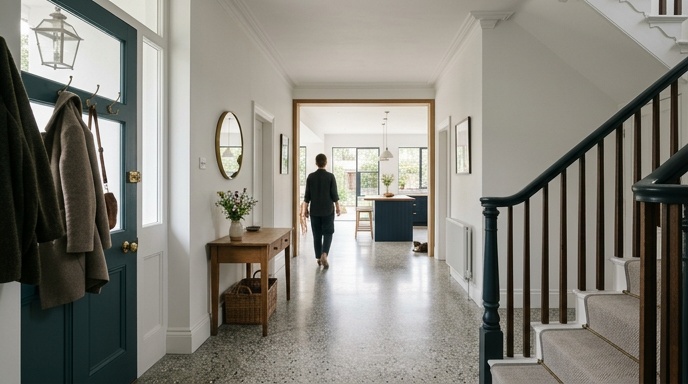
Hallways take a serious beating in Irish weather. Wet boots, dog paws, schoolbags dropped at the door. Terrazzo handles all of it without showing wear, and a patterned border or inlay can turn a narrow hall into a feature.
Bathrooms and Utility Rooms
Sealed terrazzo is naturally water-resistant, so it’s a smart pick for bathrooms. You can carry the same finish up onto the shower walls or vanity for a fully integrated look that tile simply can’t match.
How Does Terrazzo Compare to Other Flooring Options?
It’s fair to ask why you’d choose terrazzo over engineered wood, porcelain, or polished concrete. Each has its place, but terrazzo holds its own on the things that matter most to homeowners.
- Lifespan of 40 to 75 years when installed and maintained properly.
- Cool underfoot in summer and works beautifully with underfloor heating in winter.
- Low ongoing maintenance, usually just a damp mop and an occasional reseal.
- Genuinely unique appearance, since no two pours are ever identical.
- Strong resale appeal, particularly in higher-end properties.
Engineered wood looks lovely but scratches and reacts to moisture. Porcelain tile is durable but feels mass-produced. Polished concrete is hard-wearing but can feel cold and industrial in a family home. Terrazzo sits in the sweet spot.
If you’re already planning bigger works, it pairs naturally with a full house renovation or a layout change, because the floor gets poured in one continuous run once the building works are tied up.
What Should You Know Before Installing Terrazzo?
Terrazzo is a craft product. The finish you get depends entirely on the prep work, the mix, and the grinding. Cutting corners shows up fast, so it’s worth understanding what goes into a proper job.
Subfloor Preparation
The subfloor needs to be flat, dry, and structurally sound. In older Irish homes, this often means lifting existing tiles or timber, checking for damp, and pouring a fresh screed. Skipping this step leads to cracking down the line.
Choosing Your Mix and Colours
You’ll work with your installer to pick the aggregate type, chip size, and base colour. Bring fabric samples, paint chips, or photos of kitchen units so the floor ties into the rest of the room. Sample boards are normally made up before the full pour.
Timeline and Curing
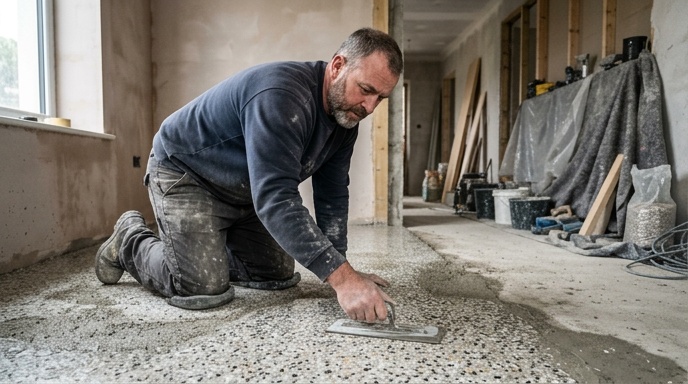
A poured terrazzo floor isn’t a weekend job. Allow 2 to 3 weeks from pour to final polish, including curing time. Pre-cast tiles are quicker to lay but still need careful grouting and sealing.
Sealing and Aftercare
Once polished, the floor is sealed to protect against staining. You’ll want to reseal every few years depending on traffic. Spills get wiped up with warm water, and that’s about the size of it.
Is Terrazzo Worth the Investment for Your Home?
The honest answer is that it depends on how long you plan to stay and what you value. If you’re flipping a house in 12 months, stick with quality porcelain. If you’re settling in for the long haul or doing a forever-home upgrade, terrazzo earns back its cost in durability and daily enjoyment.
According to the SEAI, integrating high-quality flooring with underfloor heating during a deep retrofit can also improve the comfort and efficiency of your home, which adds another layer of value beyond looks alone.
- Adds visual interest that lifts the perceived value of the property.
- Outlasts most other flooring types by decades.
- Works as a feature you build the rest of the room around.
- Reduces the need for rugs, runners, and repeat replacements.
For homeowners planning a house extension, terrazzo is also a clever way to visually link the old part of the home to the new build, especially when the same pour runs through the threshold.
How Do You Get the Best Result From a Terrazzo Installation?
The single biggest factor is choosing an installer who actually specialises in terrazzo rather than treating it as a side service. It’s a skill that takes years to refine, and the difference between a great floor and an average one comes down to experience.
Ask to see completed projects in person if you can, or at least detailed photos of finished work. Discuss the mix design, edge details, and how transitions to other rooms or thresholds will be handled. A good installer will walk you through every decision.
If you’re combining terrazzo with broader works, look for a contractor who can handle both building and finishing trades under one roof. It saves the headache of co-ordinating multiple firms and keeps the timeline tight.
Ready to give your home a style update that genuinely lasts? Get in touch with our team for a no-pressure chat about your project, and we’ll talk you through the options that suit your space and budget.